Types of Exhibition Stands: How to Choose the Right Layout and Footprint for Your Next Event
When planning your exhibition presence, two key decisions will shape everything else:
The stand type: how your space is positioned and accessed; and
The footprint: the size of your space and how it’s used.
These choices directly influence visitor flow, brand visibility, engagement opportunities, and your return on investment. With so many options, from compact inline trade show booths to expansive mezzanine event stands, knowing which option suits your brand can make the difference between a good show and a great one.
Use this guide to compare the most common exhibition stand types and the trade-offs of small vs. large footprints so you can make a confident, ROI-driven investment.
Quick Navigation
- Stand Types and Their Features
- Small vs. Large Footprint
- How to Choose the Right Stand and Footprint
- The Grand Stand Events Advantage
- TL;DR
- FAQ
Exhibition Stand Types and Their Features
1) Inline Stand (Single-Sided / Row Stand)
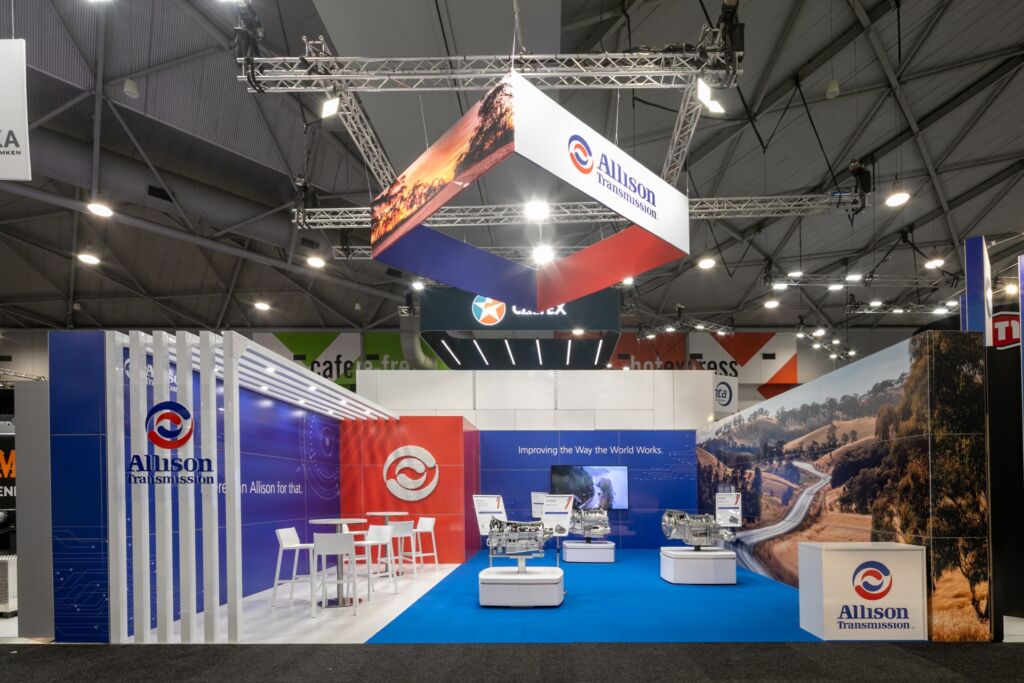
Allison Transmission – BTS 2025
- Position: In a row, with neighbouring stands on both sides
- Open Sides: 1 (front only)
- Pros: Budget-friendly, simple to design, strong back-wall branding space
- Cons: Limited visibility; visitors approach only from the front aisle
- Best for: First-time exhibitors or brands focusing on targeted messaging
2) Corner Stand
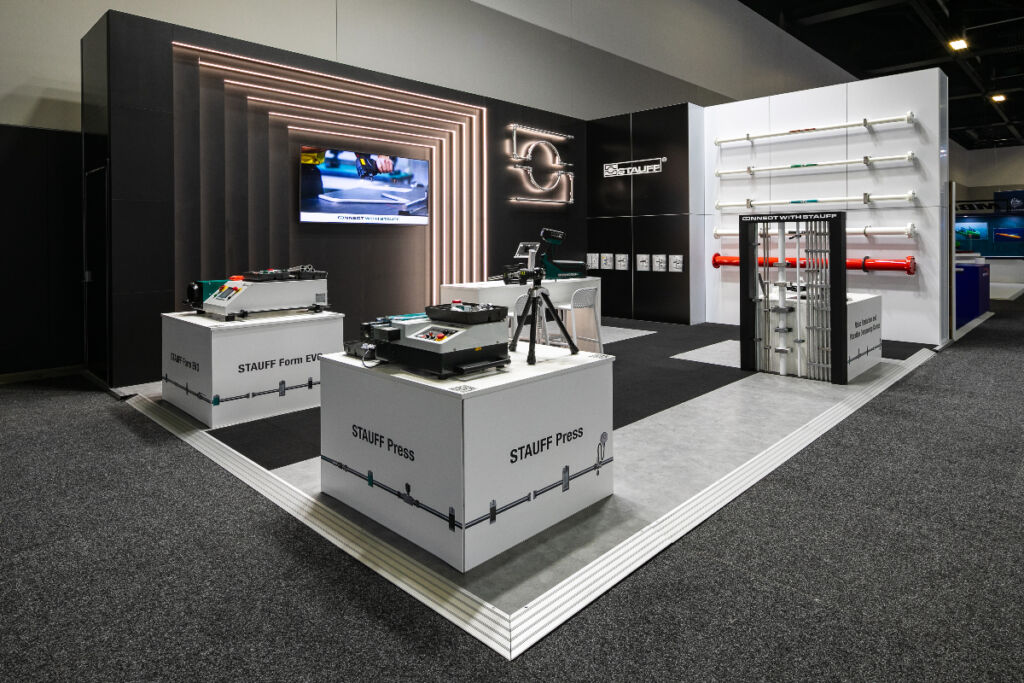
- Position: At the end of a row
- Open Sides: 2 (front and side)
- Pros: Higher visibility and traffic flow; more layout flexibility than inline
- Cons: Slightly higher cost due to prime position
- Best for: Brands wanting more exposure without a large footprint
3) Peninsula Stand

- Position: At the end of a block, backed by another stand
- Open Sides: 3 (front and both sides)
- Pros: Excellent traffic flow from multiple aisles
- Cons: No back wall — storage must be integrated into the design
- Best for: Large product displays or interactive demonstrations
4) Island Stand
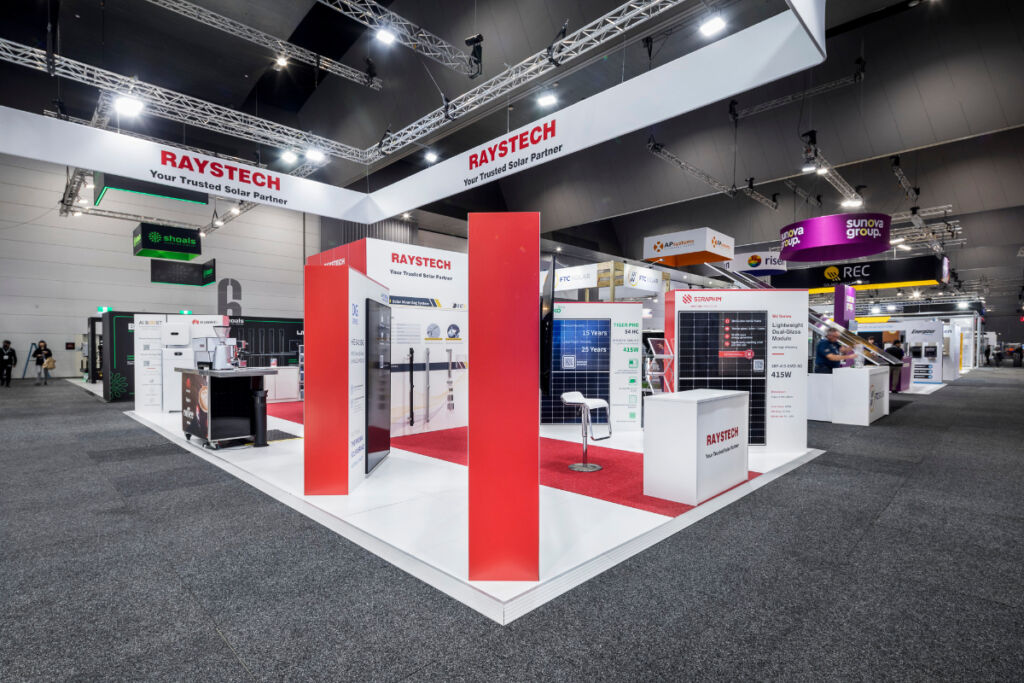
- Position: Free-standing in the hall
- Open Sides: 4 (all around)
- Pros: Maximum visibility, 360° engagement, full design freedom
- Cons: Highest cost per sqm; must look strong from every angle
- Best for: High-impact brand activations and flagship presence
5) Walk-Through Stand
- Position: Connects two aisles directly
- Open Sides: 2 (front and back)
- Pros: Unique visitor flow; encourages exploration
- Cons: Visitors may pass through without engaging unless you create stopping points
- Best for: Interactive experiences and hospitality-led engagement
6) Double-Decker Stand (Mezzanine)
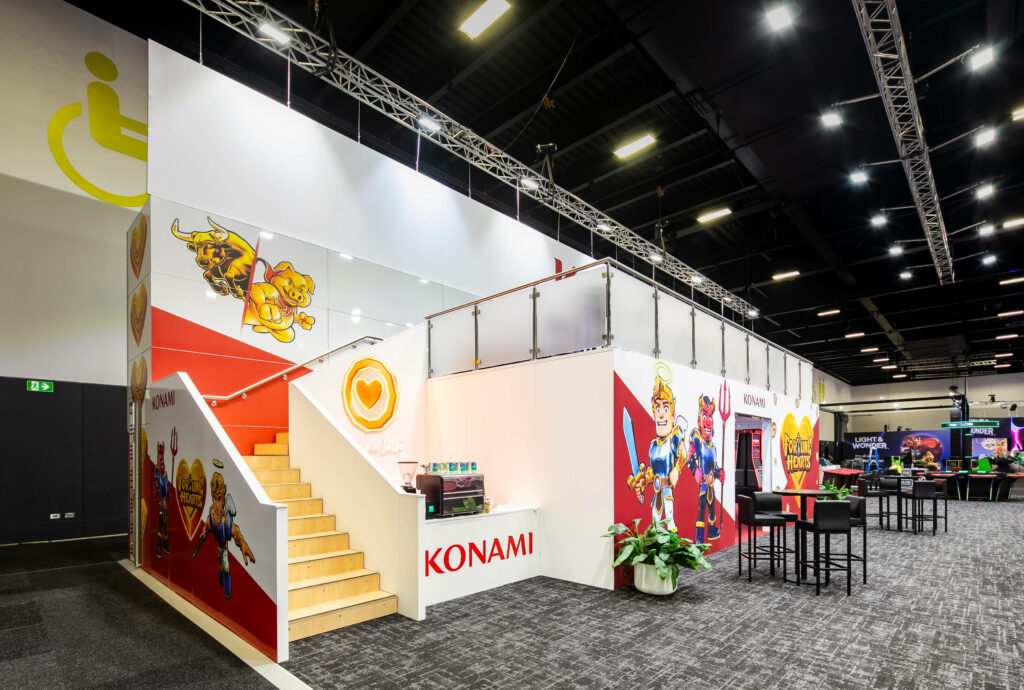
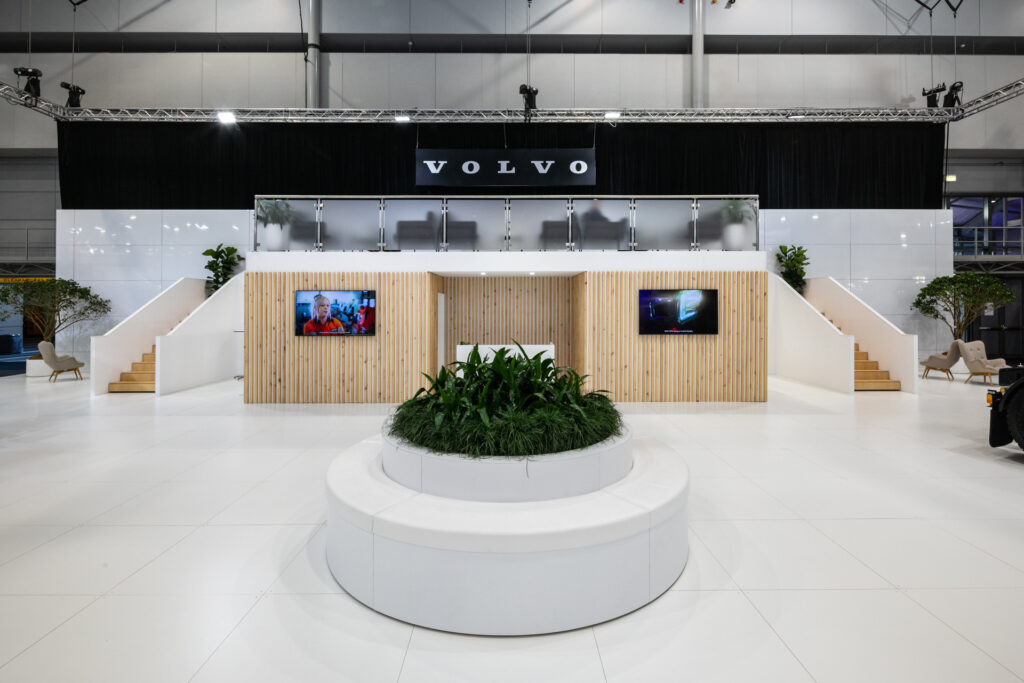
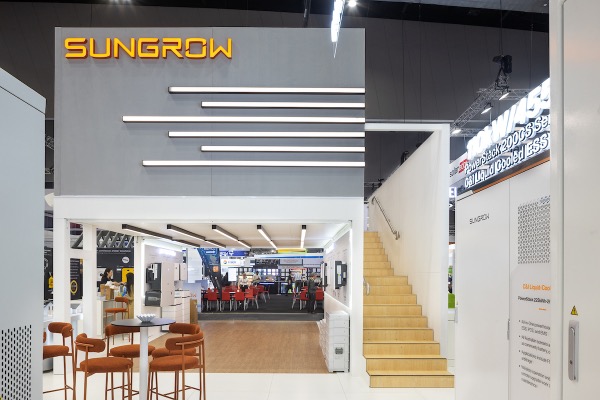
- Position: Can be built on any base layout
- Open Sides: Varies
- Pros: Maximises floor area; ideal for meetings, lounges, and VIP spaces
- Cons: Higher cost, structural engineering, and stricter venue rules
- Best for: Major launches or multi-level brand experiences
7) Shell Scheme (Organiser Supplied)
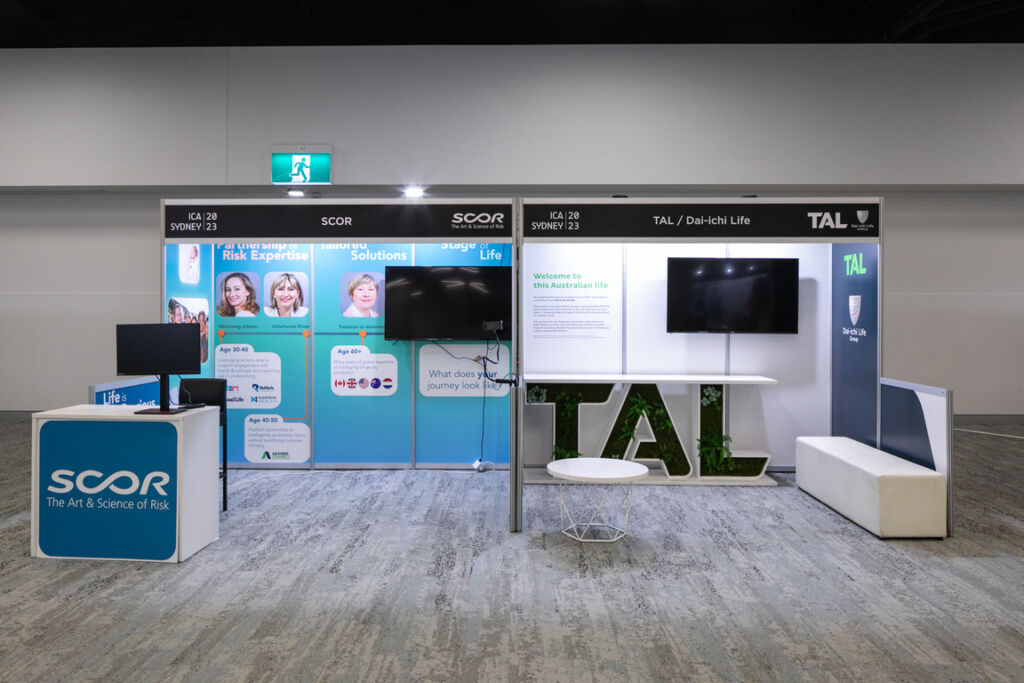
- Position: Organiser-supplied bay; typically inline or corner (varies by allocation)
- Open Sides: 1–3
- Pros: Lowest setup cost; quick turnaround; compliant by default
- Cons: Limited branding and layout flexibility; can appear generic without upgrades
- Best for: First-time exhibitors; tight timelines/budgets; test-and-learn programs
8) Pop-Up Display
- Position: Usually inline or corner; also suitable for roadshows
- Open Sides: 1–2
- Pros: Portable and reusable; fast to install; can be re-skinned and reconfigured
- Cons: Less premium look than custom builds; limited height, durability, and layout flexibility
- Best for: Multi-event programs; regional teams; short lead times
Once you’ve chosen your stand type, the next big question is: how much space do you need?
Small vs. Large Footprint: Benefits and Considerations of Your Exhibition Stand Layout
| Factor | Small (9–36 sqm) | Large (36+ sqm) |
|---|---|---|
| Cost | Low | High |
| Staffing / Management | Easy | Complex |
| Visibility | Lower — location critical | High — multi-sided |
| Capacity / Throughput | Limited | Handles heavy traffic |
| Zones (demos / meetings / storage) | Few | Many |
| Experience Depth | Focused, simple | Immersive, layered |
| Best For | First-timers, single product, tight budgets | Established brands, flagship shows, multi-team |
Not sure which is right for you? Request a free stand planning consultation.
With the basics covered, let’s look at how to match the right type and footprint to your objectives.
How to Choose the Right Stand and Footprint for Your Exhibition Booth
- • Define Your Objectives: Launching, networking, selling, or building awareness?
- • Know Your Audience: Map their likely movement through the show floor.
- • Match Layout to Engagement Style: More open sides = higher traffic; enclosed = more privacy.
- • Balance Ambition and Budget: Consider total costs, not just floor space.
- • Plan for ROI: Design with lead capture, follow-up, and reusability in mind.
Considering a Shell Scheme Space for Your Trade Show Presence?
Take a look at one of our recent articles to discover if this is right for you! Read “What is a Shell Scheme and Is It Right For You”
The Grand Stand Events Advantage
At Grand Stand Events, we can help you choose the stand type and footprint that perfectly match your event goals — and then deliver it with our full-service model covering design, build, logistics, install, and dismantle. From compact corner stands to bold mezzanine builds, we ensure your investment is strategic, stress-free, and designed for measurable ROI.
TL;DR
- • Exhibition stands come in many forms — from simple inline setups to bold multi-level builds, each with unique pros, costs, and engagement styles.
- • Small footprints = focused, cost-efficient, and manageable. Large footprints = immersive, flexible, and high-capacity.
- • The best choice depends on your objectives, audience movement, and budget — and how you want your brand remembered.
FAQS: Got Questions? We’ve Got Answers
What are the main exhibition stand types?
The most common exhibition stand types are Inline (row), Corner, Peninsula, Island, Walk-Through, and Double-Decker mezzanine builds. Exhibitors also frequently consider Shell Scheme spaces provided by organisers or portable Pop-Up/Modular displays. Each option offers different visibility, flow, and cost profiles, so the right choice depends on your objectives, budget, venue rules, and how you plan to engage visitors throughout the show.
What is a shell scheme stand?
A shell scheme stand is a pre-built booth supplied by the organiser that typically includes wall panels, fascia signage, flooring, and basic lighting. It is cost-effective, compliant by default, and quick to set up, which makes it popular for first-time exhibitors or tight timelines. The trade-off is limited customisation, so brands often add upgraded graphics, lighting, or furniture to avoid a generic appearance and improve impact.
What is a pop-up or modular display?
A pop-up or modular display is a lightweight, portable system designed for fast installation and repeat use across multiple events. Graphics can be re-skinned and components can be reconfigured to suit different footprints, which keeps costs predictable. These systems work well for regional teams, roadshows, and smaller trade shows, although they generally provide less height, durability, and premium finish than a custom-built stand.
Which stand type is best for first-time exhibitors?
For first-time exhibitors, a Corner or Inline stand is usually the safest starting point because it balances cost, simplicity, and branding opportunity. An Inline stand offers strong back-wall branding and straightforward staffing, while a Corner stand adds an extra open side for increased visibility and flow. If you need greater exposure, a Peninsula or Island stand can elevate presence, provided the budget and staffing plan support it.
How do I choose the right footprint size?
Choose your footprint by mapping objectives, expected traffic, and staffing. Small footprints (9–18 sqm) suit focused conversations and clear product stories. Mid-size spaces (18–36 sqm) comfortably support demos, storage, and one-to-one meetings. Large footprints (36+ sqm) enable multi-zone experiences, hospitality, and higher throughput. Always consider aisle access, sightlines, and lead capture points so the space supports both engagement and operational flow.
Do more open sides increase traffic?
Yes. Stands with more open sides, such as Corner, Peninsula, and Island layouts, are visible from multiple aisles and typically attract higher footfall. However, openness alone is not enough. Incorporate clear sightlines, product focal points, and purposeful “stopping points” like demos, hospitality, or content moments to convert passers-by into engaged visitors rather than allowing traffic to flow straight through without interaction.
What drives cost besides floor space?
Beyond floor space, costs are influenced by site position and open sides, stand height and rigging, material and finish quality, AV and lighting, graphics production, and storage solutions. Logistics also matter, including transport, on-site labour for install and dismantle, and compliance with venue rules. Double-Decker or mezzanine structures add engineering, certification, and additional safety requirements that should be factored into the budget.
Can my stand be reused at future events?
Yes. With the right brief, stands can be designed for reuse and reconfiguration across multiple shows. Modular custom builds allow panels, graphics, and joinery to be adapted to different footprints, while pop-up systems are inherently reusable. Proper storage, maintenance, and planned re-skins extend lifecycle and reduce total cost of ownership. Discuss reusability goals early so design, materials, and logistics support future deployments.
How do I measure ROI from an exhibition stand?
Measure ROI using clear KPIs such as qualified leads, meetings booked, pipeline value, conversions, dwell time, and press or partner outcomes. Combine digital lead capture with disciplined post-show follow-up to track progression. Spatial analytics and people counting can reveal peak periods and engagement hotspots to refine future designs. Comparing total show investment against revenue and opportunities generated provides a balanced performance view.
Contact us today to start planning your next stand or explore our Case Studies for inspiration.

BRANDS WE’VE MADE STAND OUT