Brand Activations That Actually Activate: How to Build High-Performing Experiences
What separates forgettable brand activations from the ones people actually engage with?
Walk through any exhibition, shopping centre or live event and the pattern is always the same: some activations barely register, others pull people in, slow them down and keep them there.
The difference isn’t the budget, its how the experience has been designed.
Most activations fail because they don’t give people anything to do! They rely on presence instead of participation, expecting the visual alone to carry the moment.
But attention doesn’t work like that anymore. If there’s no clear reason to engage? People keep walking.
The type of activations that cut through are the ones built around behaviour – they’re designed to stop people, give them something to interact with, and leave them with a moment that actually sticks.
What Is a Brand Activation and Why Most Miss the Mark
A brand activation is essentially an experiential marketing strategy designed to create interaction between a brand and its audience. That definition is fine on paper, but it doesn’t explain why some activations work and others don’t.
The issue isn’t the interaction itself, its how obvious and worthwhile that interaction is.
If someone has to figure out what to do, they won’t do it. If the payoff isn’t clear, they won’t stay. And if the experience doesn’t give them something memorable? There’s nothing for your audience to carry beyond the moment.
The strongest activations get three things right:
-
1. They stop people quickly
2. They make the interaction obvious
3. They give the audience a reason to care about the outcome.
When those elements are working together, engagement feels natural. When they’re not, even the best-looking activations get ignored.
1. Attention Is the First Barrier to Engagement
Before anything else can happen, an activation needs to stop people. In a busy environment, that decision had to be made almost instantly. If it doesn’t register straight away, you’ve lost.
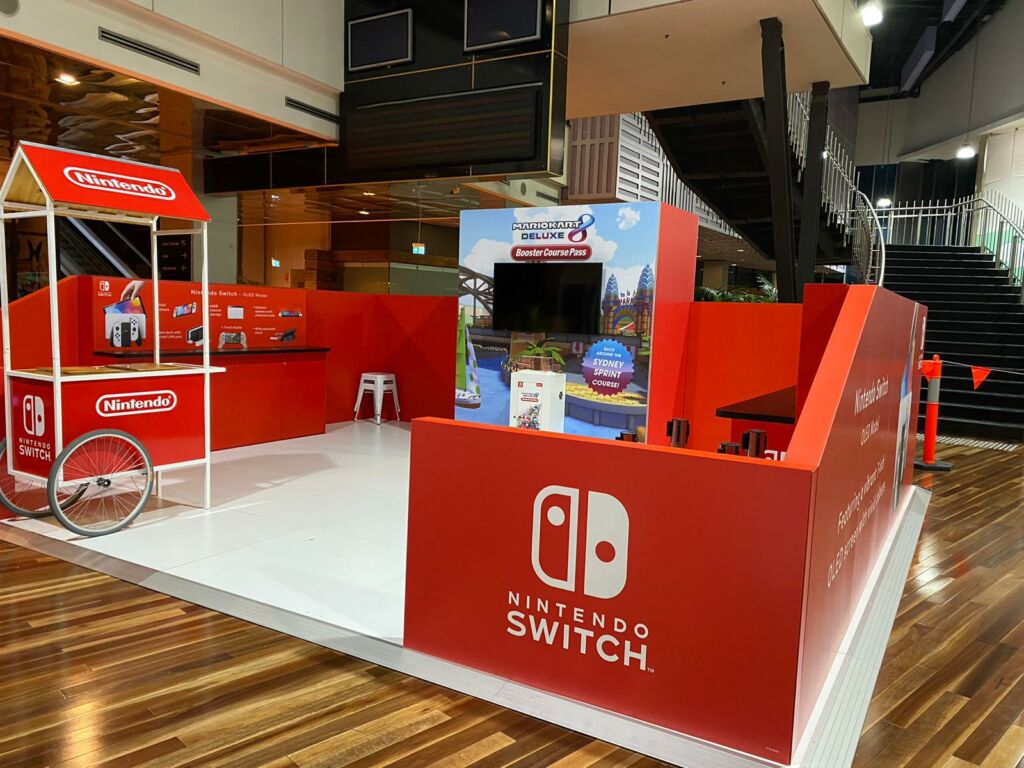
Nintendo HH Touring Activation
For Nintendo, the challenge was to create a touring activation that could hold its own in high-traffic retail environments while remaining consistent across multiple locations.
The activation leaned heavily into Nintendo’s iconic red and white palette, with clean structural elements and strong sightlines that made it instantly recognisable from a distance. You didn’t need to interpret it – you knew what it was almost instantly.
That clarity matters more than people think. When an activation is easy to read, it removes hesitation and people are far more likely to step in because they already understand what they’re walking into.
If that first moment doesn’t happen, nothing else has a chance to work.
2. Interaction Turns Interest Into Engagement
Once someone steps in, the experience needs to shift quickly. Looking isn’t enough – people need something to do.
This is where most activations fall short. They rely on visual impact but don’t follow through with a clear interaction. Without that next step, people disengage just as quickly as they arrived.
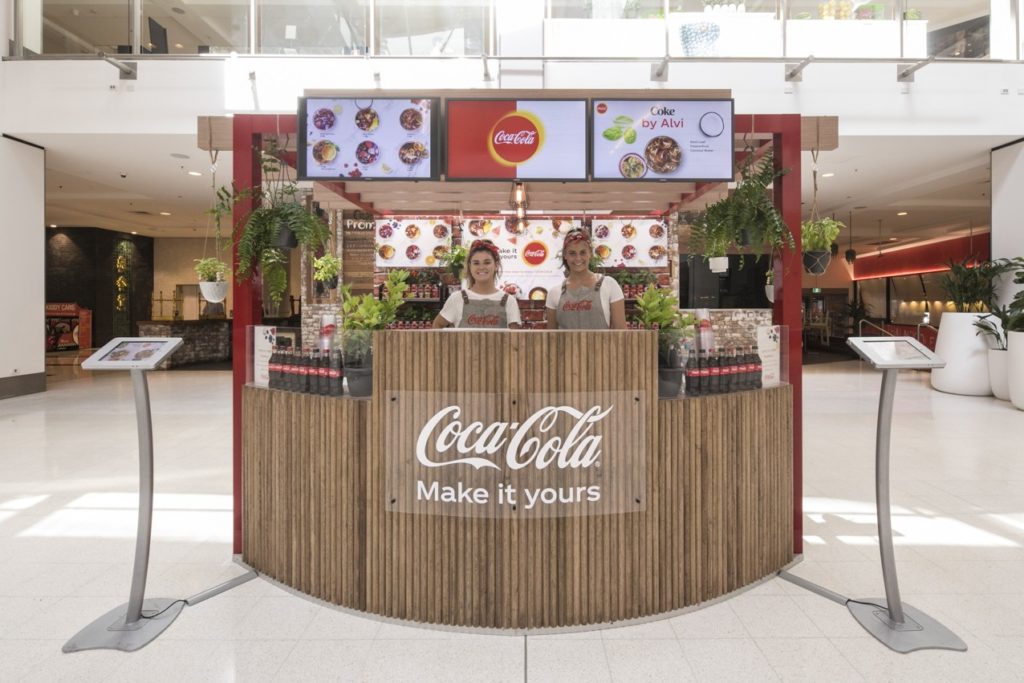
Coca-Cola “Make It Yours” Roadshow
This is where the Coca-Cola activation worked so well. Instead of offering a passive sampling experience, it gave people control. Visitors could build their own drink using different garnishes and flavour combinations, turning a simple product into something personal.
Behind the scenes, this required a highly considered setup. Workstations, prep areas, refrigeration and service flow all had to function seamlessly under pressure. The experience needed to feel effortless, even at scale.
That balance is what made it successful. It was interactive, but also efficient. People moved through the space easily, stayed longer, and left feeling like they had actually participated in something.
3. Personalisation Is What Makes It Memorable
Interaction gets people involved. Personalisation is what makes them remember it.
When someone can influence the outcome of an experience, even in a small way, it shifts how they connect with the brand.
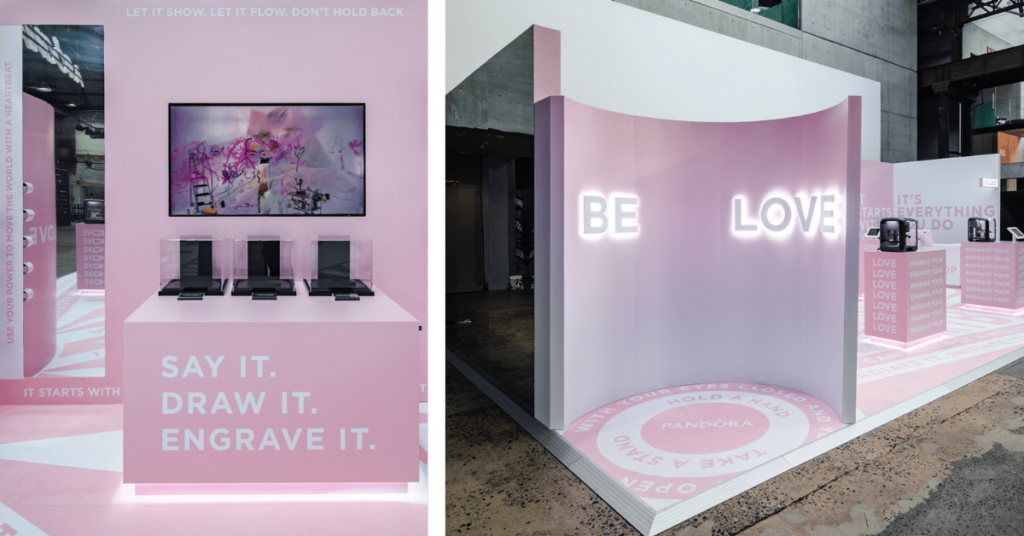
Pandora at Australian Fashion Week
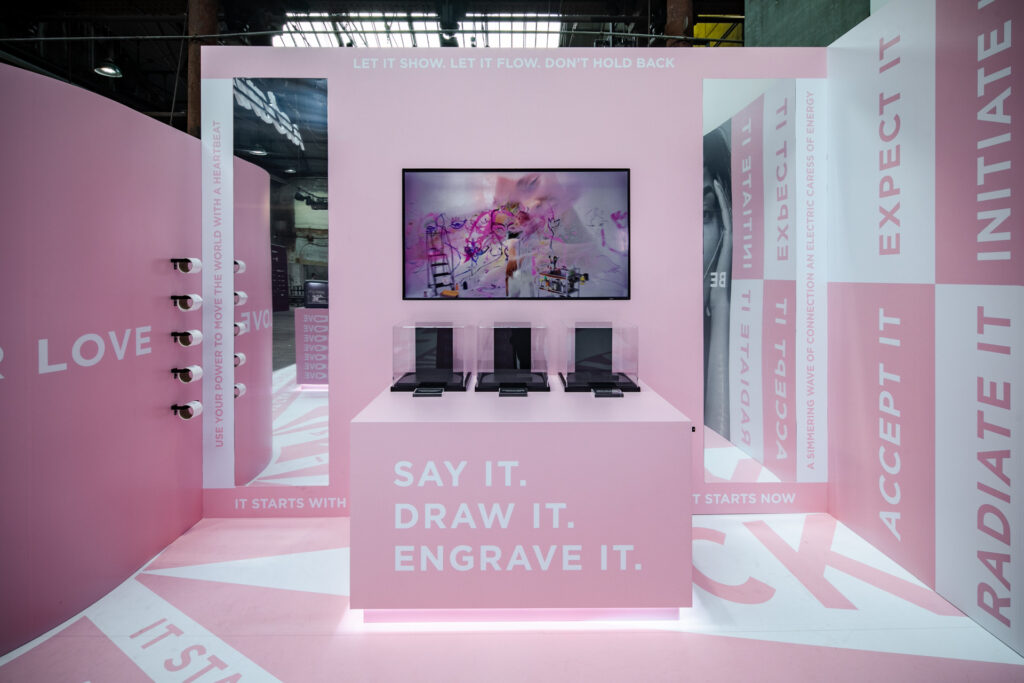
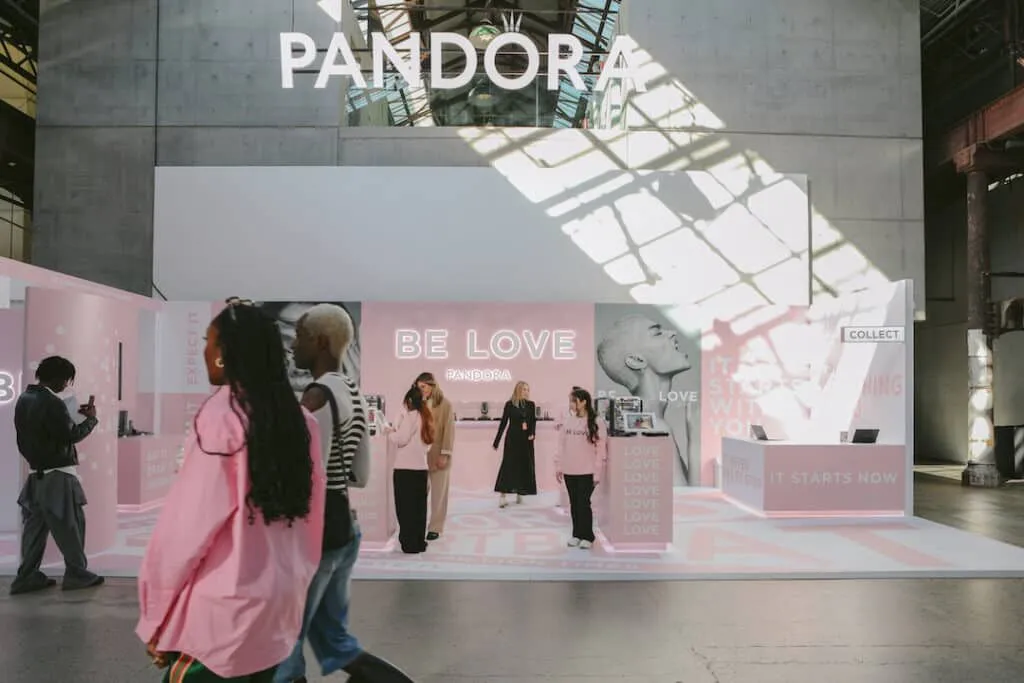
The Pandora activation combined a refined, premium environment with something much more powerful. Visitors could personalise their jewellery on-site through engraving, turning a standard product interaction into something meaningful.
The space also included a dedicated photo moment, designed to encourage sharing. This extended the activation beyond the event itself, allowing the experience to live on across social channels.
That combination of personalisation and shareability is where activations start to multiply their impact. The moment doesn’t end when the visitor leaves – it continues through content, conversation and memory.
4. The Environment Can Be the Experience
Not every activation needs a defined interaction. In some cases, the environment itself becomes the experience, shaping how people move, explore and engage.
Nothing Product Launch with Do. Agency
For the Nothing product launch at Alpha Sydney, the approach moved away from traditional display formats. Instead of placing products within a space, the entire environment was designed to feel like an extension of the brand.
Custom mesh structures were used to create creator booths, pillar wraps and a central installation that anchored the space. These elements framed the products while maintaining the industrial, architectural aesthetic the brand is known for.
By extending the activation across two levels, the experience unfolded as people moved through the venue. There was no single focal point – the entire space worked together to guide behaviour.
This approach shows how powerful environmental design can be when it is done well. It doesn’t tell people what to do. It leads them there naturally.
5. Scale Only Works When It’s Structured
Large activations can create strong impact, but without structure, they quickly become difficult to navigate and lose effectiveness.
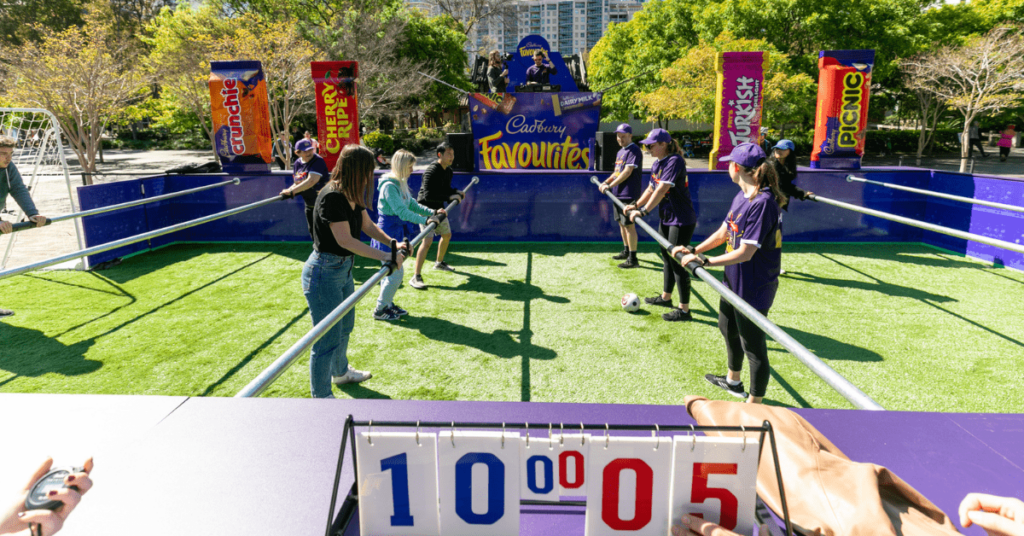
Cadbury “Team of Favourites”
The Cadbury activation centred around a large human foosball installation that immediately drew attention. But what made it work wasn’t just the scale, it was how clearly the experience was organised.
Participation zones were defined, movement was controlled, and the structure was engineered to handle live interaction safely. Everything had a purpose.
Without that level of planning, a concept like this can easily become chaotic. With it, the activation becomes intuitive and engaging.
6. Logistics Is What Makes It Repeatable
For activations that run across multiple locations, consistency becomes just as important as creativity.
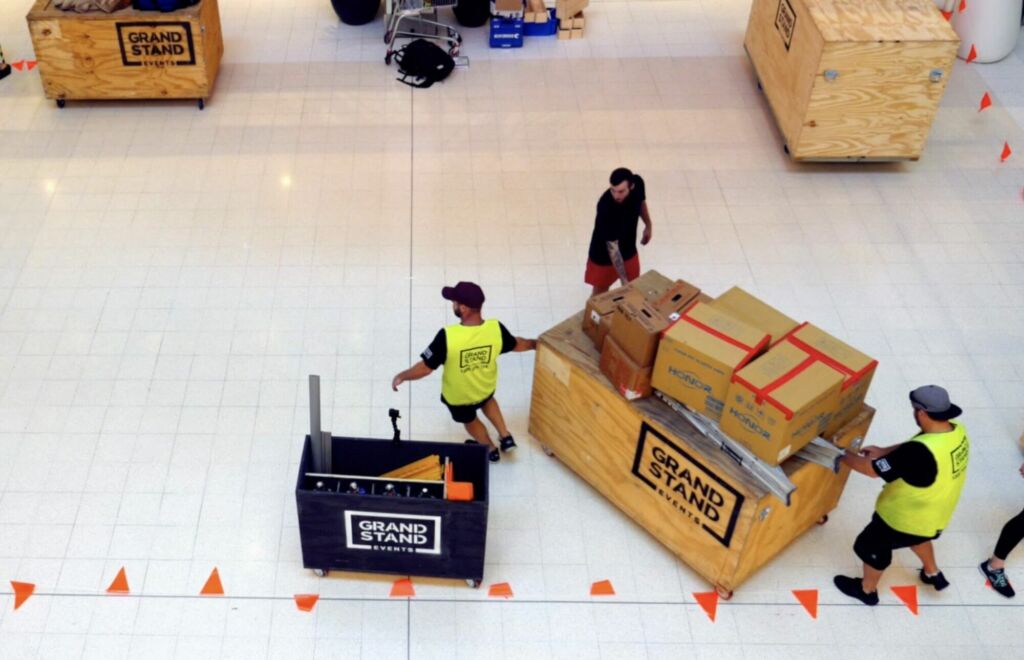
The Coca-Cola and Nintendo roadshows both relied on modular builds that could be transported, installed and dismantled efficiently. Every element was designed with repeatability in mind.
This ensured that each location delivered the same experience, regardless of the venue. From a brand perspective, that consistency reinforces trust and ensures the activation performs as intended every time.
7. Design Needs to Work Under Pressure
A strong concept is only as good as its execution. Live environments introduce real constraints like foot traffic, time pressure and safety requirements.
Each of these activations were designed to handle those conditions. Whether it was food-safe service areas for Coca-Cola, accessible demo zones for Nintendo, or multi-level structural installs for Nothing, the design had to perform as well as it looked.
This is where experience matters. Because in live environments, there’s no second attempt.
8. The Best Activations Don’t End at the Event
A strong activation should extend beyond its physical footprint. If it’s not being captured and shared, it’s leaving value behind.
The most effective activations are designed with content in mind. They include moments people want to photograph, spaces that frame the experience, and details that translate well on camera.
When that happens, the audience becomes part of the distribution. The activation continues to reach new people long after the event has finished.
What High-Performing Activations Have in Common
The activations that perform consistently are visually strong, sure, but they’re also designed with a clear understanding of how people behave within a space.
They capture attention quickly, make interaction obvious, and create an experience that feels worth engaging with. They balance creativity with practicality and are built to perform in real conditions.
Most importantly, they give people a reason to stop, engage and remember.
Final Thought
The difference between an activation that works and one that gets ignored isn’t always obvious at first glance. Both can look impressive.
The difference shows up in how people respond.
The best activations don’t just exist: they ensure involvement from the audience. And that what makes them work.

BRANDS WE’VE MADE STAND OUT